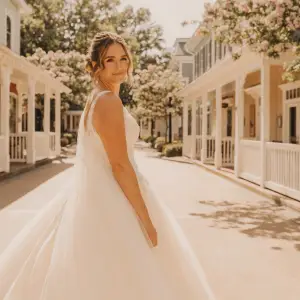
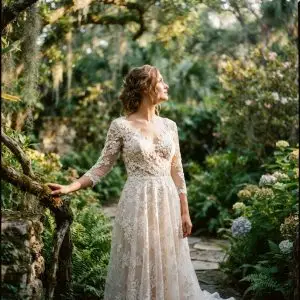
Every bridal magazine treats winter as the season of velvet, faux fur, and long sleeves under gray skies. Then a bride books a January wedding at a resort near Celebration and discovers the afternoon high is seventy one degrees and the ceremony is outdoors. Winter wedding dresses look very different here, and the national advice is worse than useless because it is confidently wrong about the one thing that matters, which is temperature.
Central Florida’s wedding season is winter. November through March is when the weather cooperates, when the humidity finally breaks, and when out of town guests will happily fly down. That means a large share of the winter wedding dresses we fit are for weddings that happen in what the rest of the country considers deep winter and what Orlando considers perfect.
Winter wedding dresses and what winter actually means here
The numbers are worth knowing before you shop. According to National Weather Service climate normals for Orlando, the average January high sits at about 71 degrees with a low near 49, February runs about 74 and 52, and December about 73 and 52. You can see the full monthly normals for east central Florida on the agency’s site.
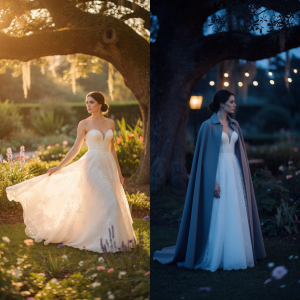
Read that spread again, because it is the whole design problem. A 71 degree afternoon and a 49 degree evening are two different weddings, and winter wedding dresses here have to work in both. A bride photographed at four in the afternoon on a sunlit terrace and the same bride at nine at night on an open lawn are experiencing a twenty degree swing in the same dress.
That is the actual brief for winter wedding dresses in Central Florida. Not warmth. Range.
Fabrics for winter wedding dresses that handle both ends of the day
The best winter wedding dresses here start with the middle weights. Crepe, mikado, and heavier satin all hold a beautiful structured line and carry enough substance for an evening that cools off, without turning into a sauna at three in the afternoon. These are the fabrics that quietly solve the Florida winter problem, and they photograph with a clean, modern weight that lighter summer fabrics cannot match.
Layered tulle and organza are lovely and they breathe, which makes them a safe daytime choice, but they do nothing for you once the sun goes down. If you love them, plan a cover.
The fabrics to be genuinely careful with are the ones national marketing for winter wedding dresses pushes hardest. Velvet is stunning in photographs and punishing at seventy degrees. Heavy brocade behaves the same way. Neither is off limits for an evening ballroom wedding at a Celebration area resort, but both are a real commitment for anything outdoors before sunset.
If you want to see how differently fabrics behave in this climate at the other end of the calendar, our guide to wedding dresses that survive a Central Florida summer covers the same logic from the opposite direction, and reading both gives you a complete picture of how the year works here.
Sleeves are the smartest move for winter wedding dresses
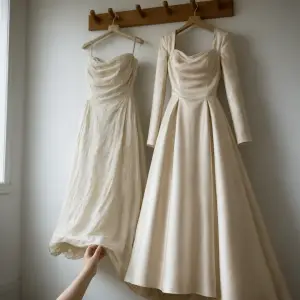
This is where Central Florida brides get to have it both ways. A long sleeve in a light fabric, illusion lace or fine tulle, gives you the look of winter wedding dresses with almost none of the heat penalty. The sleeve reads as warmth in photographs. It does not behave as warmth on your body.
Detachable sleeves do the same job with more flexibility. Wear them for the ceremony and the formal portraits, remove them for the reception, and you have two looks and two temperature settings out of one gown. More designers offer detachable sleeves on winter wedding dresses every season and it is close to purpose built for a climate like ours.
A three quarter sleeve is the underrated option. It suits the season, it flatters most arms, and it keeps your hands and wrists free, which matters more than brides expect during a long reception.
What to do about the evening
Plan for it in the fitting room rather than the week of the wedding. Brides who leave the cover up question to the end end up buying whatever is available rather than what actually suits the gown.
A matching or complementary wrap, a fine knit shrug, or a structured cape all work, and a cape in particular has become a genuinely striking choice for evening ceremonies. Bring the idea to your appointment and try covers on with the gown while you still have options, not after the dress is ordered and altered.
Bare shoulders at nine at night in February are a choice you can absolutely make. Just make it deliberately, with a plan, rather than discovering it at the reception.
Venue decides more than the calendar does
A January wedding in a hotel ballroom near Celebration is a climate controlled event and nearly all winter wedding dresses work. A January wedding on a garden lawn is an outdoor event with a twenty degree swing built into it, and the gown needs to handle both halves.
Pay attention to the ground too. Winter is Florida’s dry season, but morning dew on a lawn is real, and a cathedral train on grass at a five o’clock ceremony picks up moisture and soil. That is an argument for a chapel or sweep length train, or for a bustle you can deploy early. Our guide to Orlando’s best outdoor wedding venues pairs each venue type with the dress styles that suit it, and it is a useful companion to this piece if your ceremony is outside.
If your ceremony is outdoors and your reception is indoors, dress for the ceremony and solve the reception with layers. That order is always correct and brides frequently do it backward.
Timing your shopping for winter wedding dresses
Here is the part that catches brides. Central Florida’s winter wedding season is also its busiest booking season, and winter wedding dresses are made to order.
Plan to order six to nine months before your wedding date. For a January wedding that means shopping in roughly April through July of the year before, which feels absurdly early and is simply how production works. Add eight to ten weeks after the gown arrives for fittings and alterations, and the timeline gets tight quickly.
If you are reading this in the fall for a wedding this coming winter, do not panic and do not assume it is impossible. Tell us your date immediately and we will tell you honestly what is workable. Shorter timelines happen constantly and there are real options, but the conversation has to start now rather than after you have shopped three more boutiques.
Try winter wedding dresses on before you decide
The reason to come in is that fabric weight is impossible to judge from a screen. Two winter wedding dresses can look identical in photographs and feel completely different across a long evening, and thirty seconds of wearing one tells you more than an hour of scrolling.
Our appointments are private, which means the entire boutique is yours for the length of your visit. Book a private VIP appointment and tell us your date and venue when you book, so your stylist can pull for the wedding you are actually having.
Frequently asked questions about winter wedding dresses
What fabrics work best for a Central Florida winter wedding?
Middle weights such as crepe, mikado, and heavier satin handle both a warm afternoon and a cool evening. Layered tulle and organza breathe well for daytime but offer nothing after sunset. Velvet and heavy brocade are best reserved for indoor evening receptions.
Do I need long sleeves for a winter wedding in Florida?
No, but they are a smart option. A long sleeve in illusion lace or fine tulle gives you the look of a winter gown without the heat, and detachable sleeves let you wear them for the ceremony and remove them for the reception.
How cold does it actually get in Orlando in January?
National Weather Service climate normals put the average Orlando January high near 71 degrees and the average low near 49. The daily swing is the real planning issue, not the cold itself.
Should I plan a cover up for an evening ceremony?
Yes, and try it on with the gown at your appointment rather than shopping for it later. A wrap, a fine knit shrug, or a structured cape all work well, and a cape has become a genuinely striking choice for evening ceremonies.
Are winter wedding dresses different from other wedding dresses?
In most of the country, yes, because they are built for real cold. In Central Florida the more useful question is fabric weight and whether the gown handles a twenty degree swing between the ceremony and the end of the night.
When should I order a gown for a winter wedding?
Six to nine months before your date, which for a January wedding means shopping around April through July of the prior year. Gowns are made to order, and you need eight to ten weeks after arrival for fittings.
Can I wear a ball gown for a Florida winter wedding?
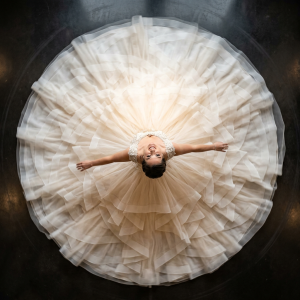
Absolutely, and winter is the best season for one here. The layers that feel heavy in July are comfortable in January, which is why full skirted gowns are so common in Central Florida’s winter season.
What about my train on a grass ceremony?
Winter is the dry season, but morning dew on a lawn is real. A chapel or sweep length train handles grass better than a cathedral, and bustling early after the ceremony protects the hem.
Is an outdoor winter wedding in Orlando a safe bet?
It is the most reliable season here, which is why so many couples choose it. Plan for the evening drop rather than for rain, and make sure your gown and your cover up work together.
Do you carry winter appropriate gowns in Celebration?
Yes. Our Celebration boutique carries Essense of Australia, Maggie Sottero, Sarah Miles, Madi Lane, Sincerity Bridal, and Stella York, with gowns from roughly fifteen hundred to five thousand dollars and a range of fabric weights suited to our actual climate.
Book your appointment
Central Florida’s best wedding weather is also its busiest booking window, and the winter wedding dresses that suit it move quickly.
Reserve a private appointment at our Celebration boutique, minutes from Walt Disney World, and browse our Orlando bridal gowns before you come. Or call us at 407.566.9198 and tell us your date.
The Dressing Room
Recent Posts