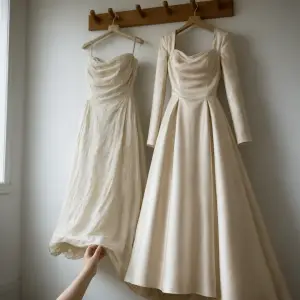
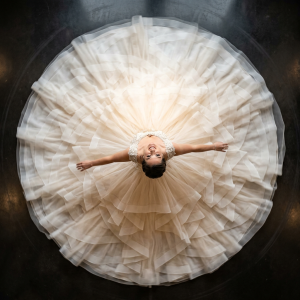
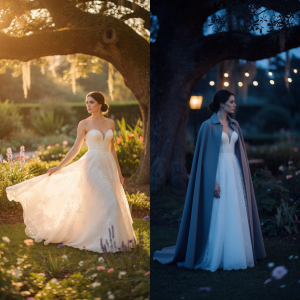
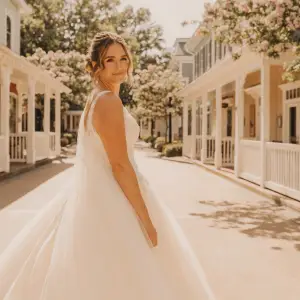
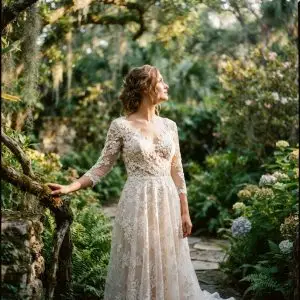
The veil is the last thing most brides think about and the first thing that shows up in every photograph from the aisle. Wedding veils get chosen in the final ten minutes of an appointment, often after the gown decision has drained everyone in the room, and that is exactly backward given how much they change the finished look.
The good news is that choosing between wedding veils is not complicated once you know the three things that actually drive it: the length, the layers, and where you are standing when you wear it. Everything else is preference.
Wedding veils start with length, because length is the whole look
Wedding veils come in named lengths, and the names are worth learning, because they are how every stylist and designer will talk to you.
A blusher is the short layer worn over the face, roughly to the chin or shoulder, and it is a layer rather than a length of its own. A shoulder or elbow veil stops where it sounds like it stops and reads playful and light. A fingertip veil falls to your fingertips with your arms at your sides and is the single most versatile length in bridal, which is why more brides land there than anywhere else. A waltz or ballet veil drops to somewhere between the knee and the ankle. A chapel veil brushes the floor and extends slightly behind you. A cathedral veil extends well past the train and is the most dramatic thing you can put on.
The rule that matters for wedding veils: the veil should either stop well short of your train or extend meaningfully past it. A veil that ends within a few inches of your hem creates a visual collision that photographs badly and is the most common mistake we see.
Layers in wedding veils do the work people credit to length
A single layer veil is clean, modern, and shows the back of your gown. If your dress has a beautiful back, and many do, a single layer is often the right call because it does not compete.
A two layer veil includes the blusher, which gives you the traditional lift moment at the altar and a softer, fuller look from the front. It also adds visual weight at the shoulders, which some brides love and some find heavy.
What layers really control is how much of your gown shows through. A heavily beaded back under a double layer tulle veil disappears. Under a single layer of fine illusion tulle it reads perfectly. Try wedding veils with the actual gown before deciding, which sounds obvious and is skipped constantly.
The veil has a long history as part of bridal dress, and the Victoria and Albert Museum’s wedding dress collection documents how gowns, veils, and headdresses have changed together across centuries. What is striking is how consistently wedding veils survived while everything around it changed.
The venue decides more about wedding veils than you expect
This is where Central Florida brides need to think differently from the national advice.
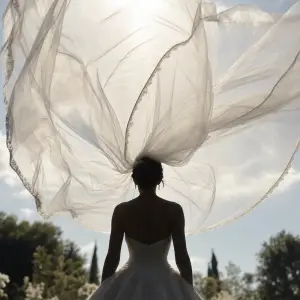
Wind is the first factor. An outdoor ceremony on a lawn or terrace around Celebration or the Orlando resort corridor means a breeze, and a cathedral veil in a breeze is a beautiful photograph and a difficult twenty minutes. Longer wedding veils need more secure anchoring, and a lighter tulle moves more than a heavier one. Tell your stylist the ceremony is outdoors and she will weight and pin accordingly.
Aisle surface is the second. Grass, gravel, and stone all grab long wedding veils differently than carpet does. A chapel or cathedral length dragging across a garden path picks up whatever is on that path.
Ceiling height and backdrop matter for indoor ceremonies. A cathedral veil in a soaring space is extraordinary. The same veil in a low ceilinged room loses the drama it was bought for. If your ceremony is outside, our guide to Orlando’s best outdoor wedding venues is worth reading for how each setting handles different dress and veil combinations.
Matching wedding veils to the gown, not to the idea
Bring the veil decision to the gown, always. A veil chosen from a photograph on your phone and a veil tried on over your actual dress are frequently two different wedding veils.
Watch the edge. A veil with a beaded or lace trimmed edge against a gown with a plain clean line can be gorgeous or can look borrowed, depending on whether the trim relates to anything else you are wearing. A raw or cut edge veil is the quietest option and nearly always works.
Watch the color too. Ivory, diamond white, and stark white are different, and a bright white veil over an ivory gown is visible in person and unmissable in photographs. This is a two second check at your appointment that saves a real problem later.
And consider skipping it. Plenty of brides look better without one, particularly with a gown that has a detailed back or a dramatic neckline. Wedding veils are not obligatory. It is one option among several, alongside combs, clips, headbands, and nothing at all. Our wedding dress accessories guide covers the full range of what can go with your gown if you want to weigh the alternatives.
Practical things nobody warns you about
The veil comes off at the reception for most brides, usually after the formal portraits. Decide in advance who is holding it and where it goes, because a veil left on a chair at a Celebration area resort does not always come home.
Hair has to be planned around it. Where the comb sits determines how the veil falls, and a hairstyle designed without the veil in mind often cannot hold it. Bring your veil to your hair trial. If you are doing a trial before you have the veil, bring a photograph and the measurements.
Wind at an outdoor ceremony calls for more pins than you think. Your stylist can advise, and your hairdresser should secure it properly rather than relying on the comb alone.
If you are wearing a blusher, practice the lift with whoever is walking you down the aisle. It takes three tries and it removes the only genuinely awkward possible moment of the ceremony.
Trying wedding veils properly
Here is the sequence that works. Choose the gown first, then try wedding veils over it, then look at the two together in a full length mirror from the front and the back, then walk. Most brides stop at the first two steps and the back view is where a veil is either right or wrong.
Photograph it. Have someone take a picture on a phone from ten feet away, because how a veil reads at conversational distance and how it reads in a photograph are different things, and photographs are what you keep.
Our appointments are private, so there is time to do this properly with the whole boutique to yourself. Book a private VIP appointment and mention that you want to work through wedding veils, so your stylist sets aside time for it rather than squeezing it into the last ten minutes.
Frequently asked questions about wedding veils
What length wedding veil should I choose?
Fingertip is the most versatile and the most common choice. The rule to follow is that the veil should stop well short of your train or extend meaningfully past it, because a veil ending within a few inches of your hem creates a visual collision.
What is a blusher veil?
The short layer worn over the face, falling to roughly the chin or shoulder. It is a layer rather than a length of its own, and it gives you the traditional lift moment at the altar.
Should I get a single or double layer veil?
Single layer is cleaner and lets a detailed gown back show through. Double layer includes the blusher and gives a fuller look from the front but adds visual weight at the shoulders and obscures more of the dress.
Do I have to wear a veil?
No. Plenty of brides look better without one, especially with a detailed back or a dramatic neckline. Combs, clips, headbands, and nothing at all are all legitimate choices.
Will my veil blow around at an outdoor ceremony?
Likely yes, which is part of the appeal and part of the challenge. Longer and lighter veils move most. Tell your stylist the ceremony is outdoors so the weight and anchoring get chosen accordingly, and have your hairdresser secure it with more pins than feels necessary.
Should my veil match my dress color exactly?
Yes, closely. Ivory, diamond white, and stark white are visibly different, and a bright white veil over an ivory gown shows in person and stands out in photographs. Check it in good light at your appointment.
When should I take my veil off?
Most brides remove it after the formal portraits and before the reception really starts. Decide in advance who holds it and where it goes, because veils get left behind at venues constantly.
Do I need to bring my veil to my hair trial?
Yes, or at least a photograph and the measurements. Where the comb sits determines how the veil falls, and a hairstyle designed without it in mind often cannot hold it.
What is a cathedral veil?
The longest standard length, extending well past the train. It is the most dramatic option and suits ceremonies with height and space, such as a large venue or a long outdoor aisle. It needs the most secure anchoring.
Can I buy a veil at your Celebration boutique?
Ask your stylist what is currently available when you book. The most useful thing is to try veils over your actual gown rather than choosing from a photograph, since the two frequently produce different answers.
Book time to get it right
The veil is a ten minute decision that shapes every photograph from the aisle. It deserves better than the end of a long appointment.
Book a private appointment at our Celebration boutique, minutes from Walt Disney World, and browse our Orlando bridal gowns beforehand. Or call 407.566.9198 and tell us what you are working on.
The Dressing Room
Recent Posts