If you’ve ever stood outside in Orlando in August, you know the question isn’t whether you’ll be hot. It’s whether you’ll be miserable. Now imagine standing there in a fully boned, multi-layered ballgown for a ceremony at three in the afternoon while your makeup is melting and your bridesmaids are wilting.
A Central Florida summer wedding is a beautiful thing. The light is incredible. The golden hour is theatrical. Outdoor venues in Orlando, Winter Park, Lakeland, and Kissimmee come into their full glory between May and October. But the dress you wear has to work with the climate, not against it. The good news: bridal designers know this, and the right gown can carry you through a 90-degree ceremony without you ever having to think about it.
This is a honest guide, written from a boutique that fits brides for Central Florida weddings every week of the year. We’re going to tell you which fabrics survive the heat, which silhouettes move air, which designers get this right, and how to plan a reception strategy that lets you actually enjoy yourself.
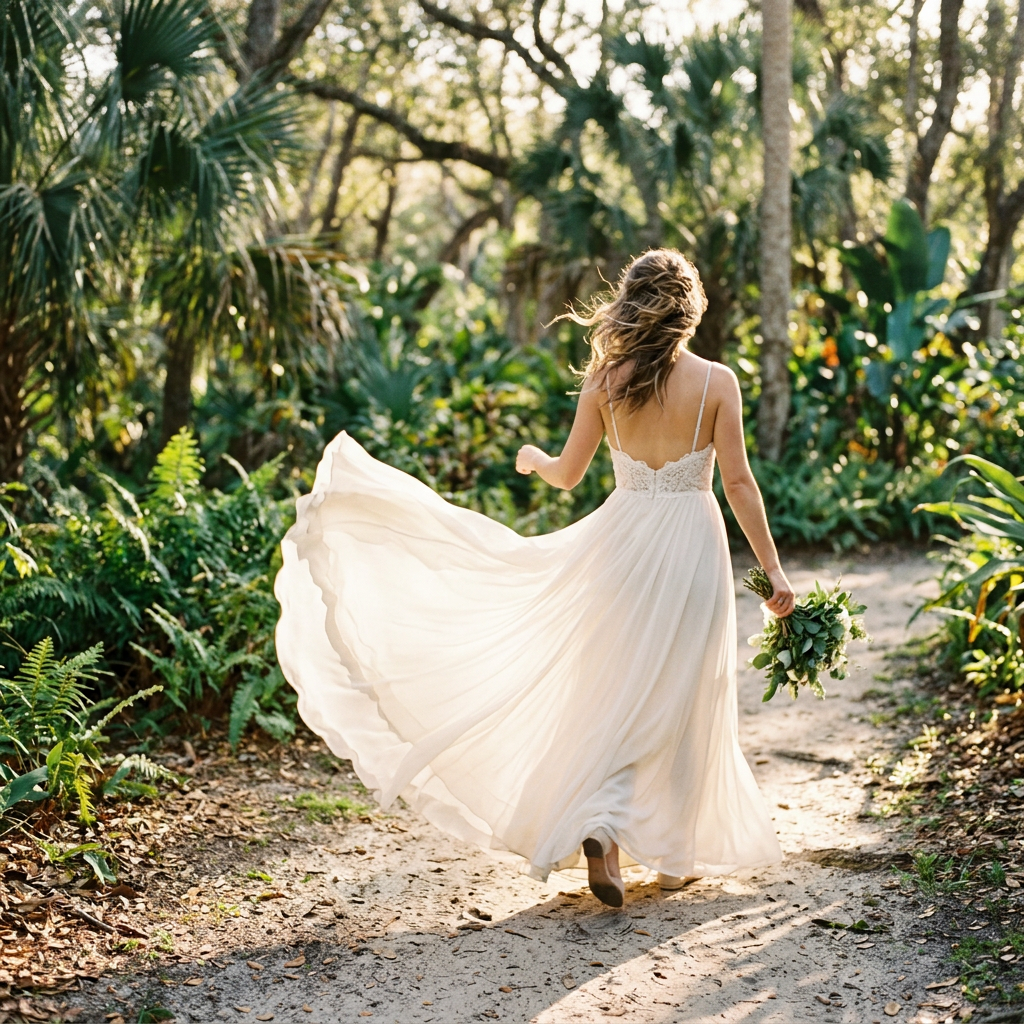
Why Fabric Matters More Than Silhouette When It’s 95 and Humid
Most brides shopping for a Florida summer wedding focus on silhouette first: do I want a ballgown, an A-line, a sheath, a fit-and-flare. Silhouette matters, but it’s the second decision, not the first. The first decision is fabric.
Here’s why. Central Florida sits in a humid subtropical climate, with average summer dew points in the high 60s to low 70s and afternoon humidity routinely above 70 percent. According to the Florida Climate Center, the only real respite is the afternoon sea breeze, and inland venues away from the coast often don’t get even that. What this means for your dress: evaporative cooling, the way your body normally manages heat, doesn’t work as efficiently. Your sweat doesn’t evaporate fast enough to cool you. A heavy fabric on a humid 90-degree day in Orlando feels meaningfully different from the same fabric at 90 degrees in, say, Denver.
So when we fit a bride for a summer Florida wedding, the conversation starts with fabric weight, then moves to silhouette. A heavy satin sheath can still feel oppressive. A lightweight tulle ballgown can actually be cooler than a structured A-line because it has air pockets. Counterintuitive but true.
The Fabrics That Work for a Central Florida Summer Wedding Dress
Several fabrics consistently perform well for Florida summer brides. Each has a different aesthetic, so the choice is partly about climate and partly about the look you’re after.
Chiffon is the lightest of the common bridal fabrics. It drapes softly, moves with the body, and lets air flow through. Chiffon gowns photograph romantically and tend to flatter a range of body types. The trade-off: chiffon doesn’t hold structure on its own, so chiffon designs lean toward the soft, romantic, sometimes Grecian end of the spectrum.
Organza is slightly stiffer than chiffon but still lightweight. It allows for more structured silhouettes while remaining breathable. Many of the romantic Maggie Sottero and Essense of Australia gowns in our Celebration boutique use organza overlays or accents because the fabric balances visual structure with practical comfort.
Lightweight crepe is having a moment in modern bridal, and it works beautifully for Florida summers. Crepe is matte, drapes elegantly, and doesn’t trap heat the way satin does. Stella York and Madi Lane do clean, modern crepe gowns that look sculptural in photos and feel light to wear.
English net (sometimes called soft tulle or illusion tulle) is the fabric you want for any sleeve, illusion neckline, or back detail in a summer gown. It’s airy, transparent, and doesn’t add visible weight. Many of our brides who want long sleeves but are panicking about July heat end up in dresses with English net sleeves and a chiffon or crepe body.
Lightweight silk and silk blends are a premium category, breathable and luxurious, often with a soft drape. Designers like Sarah Miles use silk in ways that feel substantial without being heavy.
A multi-layer tulle ballgown, surprisingly, can also work well in Florida summers, with one caveat. The layers themselves are lightweight, and the bell shape of the skirt keeps fabric away from your legs, which actually circulates air better than a fitted silhouette would. The caveat: the bodice still needs to be lightweight construction. If the bodice is heavily beaded, lined, and structured, the dress can trap heat at your torso even when the skirt feels airy.
Fabrics to Rethink (Or Avoid) for a Florida Summer Wedding
Some fabrics are genuinely uncomfortable in Central Florida summer heat, even when they look gorgeous on the hanger.
Mikado is the structured satin-twill that gives a gown that sculptural, almost architectural shape. We love mikado for fall and winter brides. For an August Florida ceremony, it traps heat against the body and doesn’t breathe. If you fall in love with a mikado gown for a summer wedding, ask about lining options and air-flow construction, but go in with eyes open.
Heavy satin has a similar problem. Bridal satin can be lined and engineered for comfort, but the fabric itself doesn’t breathe much. A long-sleeved satin sheath in July is a tough ask.
Brocade, velvet, and heavily embellished bodices with thick beaded overlays are all worth questioning for a summer wedding. The aesthetic can be stunning, but the heat retention is real. Brocade and velvet are simply not summer fabrics in Florida. Heavily beaded bodices can be made workable with strategic underlining choices, but the conversation needs to happen during fitting, not after.
The general rule we share with brides: if you can imagine the fabric in a winter wedding photograph, ask harder questions before committing it to a July or August Florida ceremony. That doesn’t mean it’s impossible. It just means the dress needs to be constructed thoughtfully.
Silhouettes That Move Air vs Silhouettes That Trap Heat
Once fabric is locked in, silhouette is the second variable. A few principles:
A-line gowns are the most universally Florida-summer-friendly silhouette. The skirt expands from the waist, which keeps fabric away from your legs while still flattering most body types. An A-line in lightweight crepe or chiffon is the closest thing to a foolproof summer dress.
Sheath and column gowns are minimal and modern, and they work well for slim or fitted styling. They’re cooler than heavy ballgowns simply because there’s less fabric. The trade-off is that fitted silhouettes show every bead of sweat if your fabric choice is wrong, so this category is unforgiving of fabric mistakes.
Fit-and-flare and mermaid gowns hug the body down to the knee or hip, then expand. They photograph stunningly but trap heat against the torso. If you love this silhouette, look for designs with stretch crepe or lightweight construction, and budget for being slightly warmer than a bride in an A-line.
Ballgowns are the heaviest category visually, but as noted, they can perform better than expected in summer if the layers are lightweight tulle and the bodice isn’t heavily structured. The lift of the skirt from the legs is your friend in the heat.
Two-piece and detachable designs are increasingly popular for Florida brides, especially detachable trains and detachable overskirts. A bride can wear a long, dramatic look for the ceremony and remove a piece for the reception. This kind of design intelligence solves a real problem.
Designers in Our Celebration Boutique Who Do This Well
A few designers in our Orlando bridal gown collection deliver consistently for Central Florida summer brides.
Stella York has a strong reputation for clean, modern silhouettes in crepe and lightweight fabrics that photograph as sculptural and feel light to wear. Their A-line and sheath designs are reliable picks for summer brides who want something contemporary.
Maggie Sottero offers romantic silhouettes that incorporate lightweight tulle, organza, and detailed bodice work that doesn’t necessarily mean heavy construction. Their range is wide enough that a Maggie Sottero summer gown can feel either traditional or modern depending on the specific style.
Essense of Australia is one of the most reliable choices for lightweight romantic gowns. Their lace and organza designs are airy and detailed without trapping heat.
Madi Lane has become a favorite for brides who want fashion-forward, lightweight silhouettes. Their crepe and chiffon designs work well in heat.
Lillian West and All Who Wander offer bohemian-leaning gowns that often feature soft fabrics and unstructured silhouettes naturally suited to outdoor warm-weather weddings. If you’re getting married at a garden venue, a winery, or a beach-adjacent space, these designers should be on your list.
The best designer for your summer wedding depends on your aesthetic, but the common thread is fabric. Our consultants are trained to listen for “outdoor,” “summer,” “garden,” “Florida,” and “destination” early in the appointment and steer accordingly.
Reception Strategy: Should You Change?
A growing number of Florida brides choose to change between the ceremony and the reception. This is a deeply personal call, and there’s no right answer. But a few considerations make the decision easier.
If your ceremony is outdoors at 4 or 5 p.m. in July or August, you will be sweating by the recessional. That’s not a flaw in your dress. It’s physics. Some brides find that changing into a lighter, shorter reception dress (a slip dress, a cocktail length, or a removable train design) makes the rest of the night significantly more enjoyable. The wedding photographer’s best images are usually captured before and during the ceremony anyway, so the ceremony dress is what lives in the album. The reception dress is for dancing.
Other brides prefer the continuity of a single look. If that’s you, the dress you choose has to be designed for that endurance. A heavy gown isn’t enjoyable to dance in even in mild weather, let alone after a humid Florida day.
A middle path: a single dress with built-in adaptability. A detachable train, removable sleeves, or a bustle that genuinely transforms the silhouette can give you two looks from one dress without changing entirely. Several of our designers do this well.
A Note on Plus-Size Summer Wedding Dresses
For our plus-size brides, the heat conversation is even more important. Plus-size gowns can have more fabric overall, and structural considerations can mean heavier construction. The good news: the principles above all apply, and at our boutique, our plus-size collection is specifically curated with breathable construction in mind. Designers like Maggie Sottero, Essense of Australia, and Sincerity Bridal offer extended size ranges in lightweight fabrics that perform well in heat.
Two practical notes specific to plus-size summer brides. First, the gown’s built-in support matters more in heat because compression can amplify discomfort. Our consultants are skilled at finding the gown that supports without binding. Second, the bodice construction is where heat usually accumulates first. Pay extra attention to lining, beading density, and back detail when fabric-testing plus-size summer dresses.
Frequently asked questions
What’s the best fabric for a summer wedding dress in Florida?
Chiffon, lightweight crepe, organza, English net, and lightweight silk are the most reliable choices for Central Florida summer brides. These fabrics breathe, drape softly, and don’t trap heat against the body. Avoid heavy satin, mikado, brocade, and velvet for outdoor summer ceremonies.
Can I wear a ballgown to a summer wedding in Florida?
Yes, if the construction is right. A lightweight tulle ballgown can actually circulate air better than a fitted silhouette because the skirt holds fabric away from your legs. The key is keeping the bodice lightweight and avoiding heavily beaded or structured tops that trap heat.
Are long sleeves a bad idea for a Florida summer wedding?
Not necessarily. Long sleeves in English net or chiffon are airy and add coverage without significant heat retention. Long sleeves in heavy satin, mikado, or lace with full lining will feel oppressive in July or August humidity. Ask your consultant about sleeve fabric specifically.
How early should I start shopping for a summer wedding dress?
Six to nine months before your wedding is the standard timeline for designer gowns and alterations. For a July or August wedding, that means starting in October through January at the latest. Earlier is always better, especially if you want to compare fabric options across multiple designers.
Should I change into a second dress for my Florida summer reception?
It’s increasingly common, and there’s no wrong answer. If your ceremony dress is heavy or structured, a lighter reception dress lets you actually enjoy the dancing. If you prefer one look, choose a gown with built-in adaptability (detachable train, removable sleeves) or focus on lightweight construction from the start.
What about strapless dresses in Florida summer?
Strapless designs can be cooler than long-sleeved options, but they require a well-constructed bodice with strong built-in support. A poorly constructed strapless gown will fight you all day, which is the last thing you need in 90-degree heat. Our consultants prioritize gowns that hold themselves up without you having to think about it.
Do bridal gowns need extra shapewear in summer heat?
Most of our gowns are constructed with built-in support and structure, so brides try them on without bras and most don’t need shapewear. In summer heat, additional shapewear can compound the heat issue. Trust the gown’s construction and add the absolute minimum required for the silhouette you want.
What’s the difference between fabric weight and fabric quality?
Weight and quality are separate. A premium silk chiffon is high-quality and lightweight. A budget polyester satin can be heavy. Quality affects how the fabric drapes, photographs, and holds up to wear. Weight affects how warm you’ll feel. Both matter, and our consultants explain the difference during your fitting.
Will my makeup melt in a Florida summer wedding?
This is a real concern, but it’s not a dress issue. Talk to your makeup artist about heat-resistant primer, setting powder, and finishing spray. The dress’s job is to not contribute to the problem. The makeup artist’s job is to solve their part of it.
Can I get married outdoors in Central Florida in August without overheating?
Yes, with planning. Choose a venue with shade or a covered ceremony space. Schedule your ceremony for late afternoon or early evening to avoid peak heat. Choose a gown with appropriate fabric and silhouette. Hydrate aggressively the day of. Many of the most stunning Central Florida weddings happen in the warmest months, with the right preparation.
Plan Your Bridal Appointment in Celebration, FL
A summer wedding in Central Florida deserves a dress designed for the climate, not against it. At our boutique on Celebration Avenue, we curate designers specifically for Florida brides, and our consultants are trained to read your wedding date and venue and steer accordingly.
Book a VIP private appointment to try on lightweight crepe, chiffon, and tulle designs from Stella York, Maggie Sottero, Essense of Australia, Madi Lane, and more. The entire boutique is yours during your visit, with no other appointments overlapping and no rushing.
Call us at 407.566.9198 or visit 613 Celebration Ave, Celebration, FL.